Why the LeStallion Writing Notebook Might Be the Productivity Tool You Actually Need
For years I chased productivity through apps and digital planners. I filled Trello boards with tasks, set up Notion databases with elaborate tags, and bought into every "smart" calendar system promising to fix my scattered attention. Each one worked for a week or two before the novelty wore off and I found myself back to default: sticky notes on the monitor, reminders I ignored, and a vague sense that I was busy without being effective.
Then I tried something analog. Not because I am a Luddite or a journaling evangelist, but because I was tired of staring at screens all day and still feeling like nothing was done. I picked up a simple notebook, a pen, and started writing down three things each morning. The difference was immediate. Not magical, but real.
That experience led me to explore what makes a physical notebook work for actual productivity. I tested a few brands, some overhyped and some genuinely well-made. One that stood out was the LeStallion writing notebook. It is not trying to reinvent the wheel. It is just a well-constructed journal with thoughtful details that make you want to write in it every day.
What Makes a Notebook Actually Productive
Productivity is not about doing more. It is about doing what matters with less friction. A good notebook reduces the friction between having a thought and capturing it. You do not need to unlock a phone, open an app, find the right folder, or decide on a tag. You just open the cover and write.
But not every notebook supports that flow. Cheap spiral notebooks fall apart. Pages bleed through with anything wetter than a ballpoint. The paper is too thin or too glossy. Lines are too narrow or too wide. These small frustrations add up until you stop using the notebook entirely.
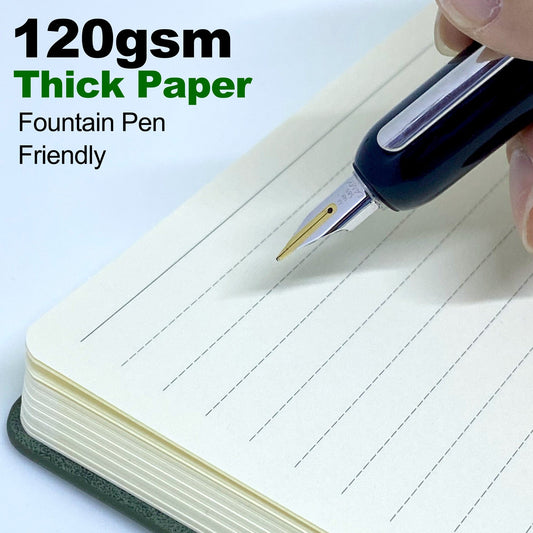
What I look for now is something sturdy enough to carry everywhere, with paper that handles fountain pens without feathering, and a layout that does not get in the way. The LeStallion writing notebook checks those boxes. The paper is thick, cream-colored, and takes ink well. The cover is hardbound but flexible enough to bend back. The binding lays flat when open. These are not flashy features, but they matter when you use a notebook daily.
How I Use a Notebook to Stay Focused
I keep a simple system. Each morning I write down one main goal for the day. Then I list up to three smaller tasks that support that goal. That is it. No categories, no color coding, no weekly review templates. The act of writing forces me to choose what matters. My brain has to commit to a single priority instead of juggling five at once.
Throughout the day I use the same notebook for notes, sketches, and random ideas. The pages become a record of how I actually spent my time. At the end of the week I flip back and see what I actually did, not what I planned to do. That honest feedback loop is more useful than any dashboard.
I also use the notebook for what I call "thinking sessions." When I am stuck on a problem I write down everything I know about it in longhand. The slower pace of handwriting forces me to think more deliberately. I make connections I would miss if I were typing. This alone has saved me hours of circling the same ideas.
The Physical Experience Matters
There is a reason handwriting feels different from typing. It engages motor skills and visual processing in ways that typing does not. When you write by hand you are not just recording information. You are encoding it more deeply. Studies have shown that students who take notes by hand remember more than those who type, partly because handwriting forces you to paraphrase and organize in real time.
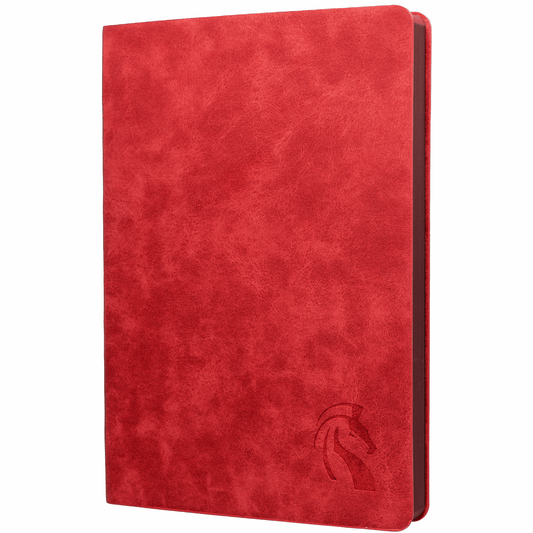
But that benefit only works if you actually enjoy writing. A notebook that feels cheap or awkward to hold will discourage you from using it. The LeStallion writing notebook is designed to feel good in the hand. The cover has a soft texture that develops character over time. The pages have a slight tooth that gives feedback as you write. Small details like these make you want to pick it up.
I have recommended this notebook to friends who never thought they would use a paper journal. Some of them now keep one on their desk for daily planning. One friend uses it exclusively for sketching out code architecture before writing any actual code. Another uses it to write down one thing she learned each day. None of them are "journal people" in the traditional sense. They just needed a tool that made writing feel natural.
What to Look for in a Productivity Notebook
If you are considering switching from digital to analog planning, here are a few things to keep in mind:
- Paper quality matters more than anything. If the paper bleeds or ghosts, you will not want to write on both sides. Look for at least 80 gsm paper, preferably 100 gsm or higher.
- Binding should lay flat. A notebook that does not stay open forces you to hold it with one hand while writing with the other. That gets old fast.
- Line spacing should match your handwriting size. Standard is 7 mm, but if you write small or large, adjust accordingly. Dot grids are a good compromise for flexibility.
- Cover durability counts if you carry the notebook in a bag. A softcover can work but needs to be stiff enough to protect the pages. Hardcovers last longer but add weight.
- Number of pages is a trade-off. A notebook with 200 pages will last months but can feel bulky. A 100-page notebook is more portable but you will replace it sooner. Choose based on how fast you fill pages.
Why I Keep Coming Back to Paper
Digital tools have their place. I still use a calendar app for appointments and reminders. I still use a task manager for projects with many moving parts. But for daily focus, for thinking through problems, and for keeping a record of what I actually do, nothing beats a simple notebook.
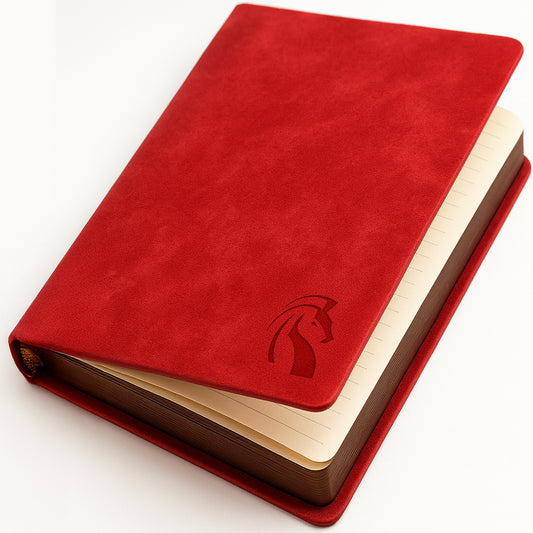
The LeStallion writing notebook sits on my desk right now, half full. It has scribbled meeting notes, a few half-baked ideas for articles, a shopping list, and a sketch of a garden layout I never built. It is messy and imperfect. But every time I open it I remember what I was thinking about that day. That continuity is something digital systems have never given me.
If you have tried productivity methods and none of them stuck, consider whether the problem is not the method but the tool. A good notebook respects your time by making writing effortless. It does not demand that you learn a new system or sync across devices. It just waits for you to write. That quiet invitation might be exactly what you need to start getting things done.